Showing posts with label Books. Show all posts

Friday, December 24, 2021

RIP Anne Rice

I haven't read any Anne Rice in more than 20 years, but I'll always fondly associate her early vampire novels with the time when I was a teen and really getting into reading voraciously (something which came crashing down when I entered the real world of employment/slavery). As a Christmas gift, my aunt bought for me a paperback set of the first three novels, despite her initial objections to buying something titled The Queen of the Damned. 

My book notes reveal that I was reading Interview With the Vampire at the time I graduated from high school in 1991, and I read the next two within a few months. My notes also indicate that I liked Queen best of the first three books, although that was not how I remembered it before digging out those old pages that meticulously document the books I read. I also read The Tale of the Body Thief, the fourth of The Vampire Chronicles series, a few years later, and that concluded my consumption of Rice's work. I think I sensed by that point she had said what she had to say. At times, I felt the series sagged under the weight of excessive historical detail, but I ultimately bestowed highly favorable ratings on each of the first three novels.

I admire Rice's deadly serious approach to the subject matter; she aimed to elevate the genre with an eye to being a lasting influence, and I believe she succeeded. I'm not sure the sophistication of the Sookie Stackhouse and True Blood stories would have emerged had Rice's treatment of the genre not happened. The idea of a vampire living as a rock star was a groundbreaking departure from caped bloodsuckers crawling up the exterior walls of castles to a young woman's window in the dead of night.

We'll be looking to the upcoming AMC series Interview With the Vampire, coming in 2022, as a fitting tribute to the queen of vampire horror.

Friday, May 15, 2015

A farewell to the great Ruth Rendell

Certain people, it sometimes seems, will always be there. Never in your life will there be a time when they do not live, do not exist. They will just always be. For me, Ruth Rendell, a brilliant British mystery writer, was one of those people. So, I was devastated to learn she died May 2 at age 85 after suffering a stroke in January.

Circa 1994, maybe 1993, an acquaintance, apropos of nothing, gave me a paperback copy of her ’93 novel The Crocodile Bird. I’d never heard of her, but it looked interesting, and I gave it a read. It was amazing … amazing in that special kind of way that really gets inside your head and plants the seed of obsession with its creator. I began to gobble them up and was dazzled by her ability to get inside the heads of messed up people. As many have said before, a Rendell novel isn’t simply a whodunit, it’s a whydunit — an examination of how a particular person became sufficiently unhinged to kill. And she had a way of making us see a hint of ourselves in those damaged individuals. This, combined with her deadpan wit and laser-sharp literary (but not stuffy) prose, gradually made her my favorite fiction writer, and it gave her the reputation of elevating the mystery genre.


Rendell, as devotees know, came in three flavors — the Inspector Wexford mysteries (in the U.K., these were the subject of a popular and long-running TV series), the standalone novels of psychological suspense, and the pseudonymous Barbara Vine novels. My favorites were the standalone novels of psychological suspense, with A Sight for Sore Eyes, 13 Steps Down and Adam and Eve and Pinch Me being outstanding examples from the later years. With a few, like 13 Steps Down, she even slipped in an effectively chilly hint of horror. When it comes to the Vines, my favorites — No Night Is too Long and The Chimney Sweeper’s Boy — are not the ones usually named.

Among my treasured possessions are a first-edition copy of her first novel, From Doon with Death (1964, The Crime Club), snagged from the local library discards (a bonus of getting to know some of the staff), and a couple of signed copies of other novels. 


If I could have three wishes, one of them would be tea with Baroness Rendell of Babergh. We share things in common, such as working as journalists and a certain world view. I would give anything to hear her war stories.

I can take some solace in knowing that I haven’t yet read at least half of her stunning output of more than 70 books, if you count the Vines and the short story collections, but there is no real comfort to be found in losing an idol.


Related posts //

13 Steps Down
The Water's Lovely
Make Death Love Me
The Minotaur

Saturday, December 07, 2013

Lady Gaga's Applause

So she really likes the artist Jeffrey "Jeff" Koons. Anybody else's mind want to hear "Koontz," as in the novelist Dean Koontz, in the quite good single, "Applause"? 

"One second I'm a Koontz, then suddenly Dean Koontz is me!" 

Makes me think of reading his novel Lightning a million years ago.

Saturday, May 03, 2008

Books: The Water's Lovely • Ruth Rendell

Genre: Mystery, psychological suspense
Released: July 17, 2007
Verdict: &&&

Having read about two dozen novels by Ruth Rendell and her alter ego, Barbara Vine, I've never felt I could sense the old master pulling the strings of her hapless characters until The Water's Lovely. At the heart of the plot is a dark family secret — no surprise there — involving the death of a stepfather-to-be of a pair of sisters. It's not giving anything away to say that one of the sisters had a hand in his death, and it casts a shadow over the rest of their lives and drives their mother to madness. Repercussions of that murderous act surface later in life as the two court prospective mates. Meanwhile, Rendell's wicked, deadpan sense of humor is in rare form, and she's having nearly too much fun with a character who is consumed with hypochondria, a young lady who sits with the elderly while plotting to get in their good graces and then kill them for their fortune, and a character who encounters the miseries of dating in late middle age. It's all spun with her usual skill and elegant prose but feels a tad contrived when measured against late-period peaks such as A Sight for Sore Eyes.

Incidental >> Rendell's next novel, Not in the Flesh, an entry in the venerable Wexford series, is due June 10.

Sunday, January 20, 2008

This week: New Stephen King, Burnout

• Notable entertainment product in stores Jan. 22 and a movie in theaters Jan. 25.

Books
Stephen King • Duma Key // What's the last really good King you read? Insomnia? An early Dark Tower selection? The Shining? The last couple novels — Cell and Lisey's Story — have given me some hope that the mid'90s to '00s slump of books like Rose Madder and The Girl Who Loved Tom Gordon might be waning. Like Lisey's Story, Duma Key appears to be another of his Serious Writer efforts, and that's OK if it's as rich as Lisey's Story, which has its dead weight but is a step in the right direction.

Music
MGMT • Oracular Spectacular // If the album is half as good as the first track, "Time to Pretend," which opens like a bad Erasure track but quickly redeems itself, this will be a must. "Time to Pretend" has been a free download at iTunes.

Natasha Bedingfield • Pocketful of Sunshine // Will she forever be remembered as Daniel Bedingfield's sister and the chick who churned out one great pop single, "Unwritten"? Herein may reside the answer.

Movies
Untraceable // The trailer seems to reveal 90 percent of what happens in the movie, a torture porn twist in which Diane Lane tries to stop a killer who broadcasts his unthinkable handiwork on the Internet, making everyone who looks an accomplice.

DVD
In a quiet week on the DVD front, I'm a tad ashamed to say I would watch The Simple Life: Goes to Camp (10 episodes), and proud to say I wouldn't watch Saw IV (how many more?).

Games
Burnout Paradise (Playstation 3, Xbox 360) // The first incentive I've seen to actually buy a PS3: a title billed as a reinvention of the amazing Burnout series, a racing game focused on crashing and destruction that is a singularly brilliant catharsis.

Wednesday, September 26, 2007

Books: The Resort • Bentley Little

• Don't call for room service.

Genre: Horror
Released: September 2004
Verdict: &&1/2

I was on the verge of granting Bentley Little a sidebar tag until making a reservation at The Resort, where the guests, like the roaches, do check in, but often don't check out (sorry — I always loved the marketing of the Roach Motel). It's the third title I have read by Little (his latest, The Vanishing, just hit stores in August), who cooks up some interesting ideas in better novels such as The Ignored and Dispatch and demonstrates a consistent flair for dark comedy and the absurd. The Resort contains plenty of the latter but not so much the great idea part. About two-thirds of the way in, the story meanders and the ship is never righted, failing to reach a conclusion that satisfies on any level. The resort in question is The Reata, a luxury complex where guests find themselves amongst strange doings: The activities director recruits guests into games of basketball that end in bloodshed and severed limbs. A giant, sideways-leaping spider torments a magazine writer in his room, where he often hears the sounds of an all-night party or gunshots in an adjacent room that the staff tells him is empty. A teenager spots a golf driving range where women are tied to poles and pelted by iron shots. Although they realize things are amiss, the guests find themselves under a sort of hoodoo and are powerless to leave. The uninspired denouement sadly goes the clichéd and violent route. I'll give Little at least one more shot with The Store, a 1998 novel that takes discount store culture to new levels of evil and is now in development for a feature film.

Saturday, August 18, 2007

Books: Lisey's Story

• King treads some familiar ground in a book that still manages to be vital.

Released: Oct. 24, 2006; current in paperback
Verdict: &&&1/2

Lisey's Story is a novel foremost about the depths of love, but it's also about madness and (again) the writing life. Upon its release last year, it had the uninspiring air of one of those latter-day King reads that you expect to be a chore, like The Girl Who Loved Tom Gordon or the forgettable parts of Hearts in Atlantis, but the critical buzz convinced me not to skip it (an option that would never have entered my mind years ago before books like Rose Madder and the aforementioned Tom Gordon). King himself has said this is probably his best book, and I say without hesitation that he couldn't be more wrong. It is a good one, however, with an energy in his prose surpassing that of last year's other King novel, Cell. Lisey Landon is the widow of famous novelist Scott Landon, now two years departed. She is threatened by an intellectual and a thug who are out to get her husband's unpublished work, and this sets the stage for flashbacks to Scott's tormented childhood living with a mad father and brother and to pivotal events such as an attempt on Scott's life and his eventual death years later. Early on, the reader gets the promise of something more as Lisey recalls Scott's fear of a certain something glimpsed in the reflection of a drinking glass and the thing he tells her about with an "endless piebald side." King is at the top of his game telling and retelling the murder attempt in excruciating detail, down to Lisey watching a blood bubble burst from his lips as he lies possibly dying of a gunshot at a library dedication. That's only the beginning of the layering that continues throughout the hefty novel; Scott's torture at the hands of his father and his brother's madness or possession is woven into Lisey's present-day tribulations. An element of fantasy surfaces as the story visits "Boo'ya Moon," a mystical place of healing and inspiration and other strong emotions. (I found this bit vaguely reminiscent of the painting in that awful early '90s novel Rose Madder. There's a glimpse of Boo'ya Moon underneath the hardcover's dust jacket, and it makes this one of the most attractive books in the King library.) As with many King tomes, it would benefit from some trimming; the tedious subplot involving Lisey's mentally disturbed sister Amanda never engaged me. With so much of Lisey's Story exploring the nature of love in a deep relationship, I'd wager that women tend to like this novel more than men do, and people interested in mental disorders may find it particularly entertaining. Even if it isn't interesting on the level of a Misery or The Shining, King is writing full throttle here, and readers would do well to partake.

Wednesday, March 14, 2007

Racy reads

The recent passing of Sidney Sheldon, a playwright, screenwriter and novelist, prompted some lively discussion among Entertainment Weekly readers about "forbidden" books — racy reads they discovered as curious teens and apparently fondly remember for those "enlightening" passages. Many of the first novels I read were by Sheldon — I think it was because my grandmother was reading them — and I recall those thick paperbacks as being much in quality like the movie Independence Day, which seemed good in the moment but horrible in hindsight. With titles like If Tomorrow Comes and Rage of Angels, they flowed more like screenplays than novels, really, so it's no surprise Sheldon is better regarded for his work in television (he created I Dream of Jeanie, Hart to Hart and The Patty Duke Show). The last of his novels I remember reading is The Doomsday Conspiracy, which, given his style, was an uneasy stab at an alien invasion tale. I can't remember any alien-human sex scenes, but I'm sure they were there.

Other writers frequently mentioned by EW readers as adding a little extra spring to their early literary adventures are Judith Krantz, Scott Turow (wha?) and Stephen King. Having read probably 90 percent of King's books, I'll agree with that — the early ones, in particular, can be counted on for gratuitous bits here and there.

Following is the top five EW compiled based on reader feedback. One I can think of to add is Firefly by Piers Anthony, in which an alien mimics sex pheromones to lure its prey:

1 Flowers in the Attic • V.C. Andrews (1979) Described by EW as an "incest classic." I'm ashamed to say I've read it and saw the movie on TV. Andrews died in 1986 but has been prolific from the grave, producing far more novels than she did when alive.

2 Forever • Judy Blume (1975)

3 The Godfather • Mario Puzo (1969) In retrospect, my young adulthood seems less boring knowing that other teens were reading Scott Turow and The Godfather.

4 Chances • Jackie Collins (1981)

5 The Clan of the Cave Bear • Jean M. Auel (1980) Pegged as "prehistoric porn." Now I know why all those girls were carrying it around back in junior high.

What literary "classics" would you add?

Tuesday, November 28, 2006

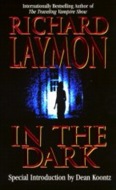
Books: In the Dark • Richard Laymon

• A librarian takes dares for cash in this chiller.

Genres: Horror, suspense/thriller
Released: 1994
Verdict: &&1/2

It's as if Who Wants to Be a Millionaire producer Michael Davies whipped out a horror novel: Mild-mannered (and somewhat unlikable) librarian Jane Kerry finds a note that leads her to a book containing $50 and another note. The second note contains instructions that lead her to $100. From there, the money and the perils multiply with each successive note signed by Mog, the "Master of Games." Her only lifelines are her moxie and a handsome new friend named Brace. The author was onto an intriguing concept that seems in some ways to foreshadow the reality TV games to come. Just how far will a person go for a stack of 16 fresh $100 bills? The best of these mischievous missions finds Jane donning a negligee and crawling inside a coffin in an abandoned, decrepit house. It's both believable that she would do it and genuinely unnerving. From there, however, Laymon goes completely over the top, and the fragile thread of believability snaps. The compelling concept presented an opportunity to delve into the character's psyche as she wrestled with the impulse to keep pushing her limits and raking in the cash, but Laymon never gets beneath the surface of that angle; he instead takes the lightweight path, throwing in gore and sex at the point where the missions should have become psychologically challenging. I'm willing to give Laymon another shot, however — he churned out more than 30 novels and apparently achieved greater success overseas. Still, despite, a posthumous Bram Stoker Novel of the Year Award in 2001 for The Traveling Vampire Show, In the Dark suggests he's more Koontz (who, appropriately enough, penned an intro for the book) than King.

// Is it also a movie? // The cover art, according to the credits page, is from the movie Richard Laymon's In the Dark, but a quick search at All Movie and Imdb reveals that there's no such release, nor any credits for director Clifton Holmes. A Google search turns up a now defunct page for a production company called Gemineye; the Internet archive, fortunately, has it cataloged here. The movie was completed but apparently never released beyond a few screenings that garnered some positive press and comparisons to The Blair Witch Project for its black-and-white, gritty style. Laymon also gushed about the movie, the first screen adaptation from his prolific body of work. It seems the movie might have been more enjoyable than the book. Perhaps this will show up on DVD someday, although, six years later, that seems unlikely.

Friday, October 06, 2006

Books: The Minotaur • Barbara Vine

• This novel is a bit of a beast.

Genre: Mystery
Published: March 21, 2006, by Shaye Areheart Books
Verdict: &&1/2

At least one and possibly two Vines (The Chimney Sweeper's Boy and No Night Is too Long) would rank among my top 10 favorite novels, but this 1960s-set drawing room character study tested my patience. A young Swedish nurse, Kerstin Kvist, is hired to provide care for John Cosway, a misunderstood autistic man living with his mother, stuffy old Mrs. Cosway, and his four spinster sisters. This takes place at Lydstep Old Hall, an English mansion with a library containing a maze and dark family secrets hiding in the shadows, as they do in all Vines. Kerstin quickly surmises that John is being fed pills he doesn't need to keep him tranquilized, and she's left with little to do beyond make notations in her diary about the sisters' conflicts and romantic affairs while pining for John to come out of his fog — something his mother fears. The writer (Ruth Rendell, penning her 12th pseudonymous Vine) is particularly adept at portraits of troubled souls, but this is ultimately less about John than the sisterly and motherly drama that builds to an unsurprising and not particularly interesting climax. Though the prose flows with her usual grace and literary precision, The Minotaur doesn't live up to the master's usual standards.

// Incidentally // Patricia Cornwell has called Rendell/Vine "unequivocally, the most brilliant mystery writer of our time."

Sunday, August 27, 2006

Books: Dispatch • Bentley Little

• Bentley Little redefines the poison-pen letter.

Genre: Horror
Published: 2005
Verdict: &&&

Jason Hanford is a persuasive letter writer. His interest in correspondence awakens with a school penpal project in which he portrays himself as everything he's not — popular, athletic and from a prominent family. Later, he begins to pen complaint letters to fast food joints and theme parks, yielding free food and leisure. Realizing that his letters have the power to affect change, Hanford becomes bolder, tackling city problems and stirring debate in the newspaper editorial pages for his own amusement. Naturally, in the hands of Bram Stoker Award-winner Bentley Little, the application of Hanford's talent becomes deadly serious, particularly as Hanford struggles with an abusive family life. Little has a talent for Twilight Zone-esque ideas, but with a darker bent. Reading Dispatch, I was reminded of Stephen King's short story "Word Processor of the Gods" and, to a greater degree, Little's own novel The Ignored, in which a man whom people simply don't notice anymore discovers that there are others like him, and they become joined in a common cause. Essentially the same happens in Dispatch: Hanford is recruited into a letter-writing business and discovers that the other employees share his unique talent for correspondence that gets things done. Dispatch also shares The Ignored's pervasive tone of modern ennui. Little excels with the maudlin, such as in this nugget from Hanford's first-person narrative: "There is a point, I think, where life starts to seem sad, when a person adopts one of those live-in-the-moment philosophies because looking back on all of the missed opportunities is too painful, and looking forward, there does not seem to be the time to create a new future with a different outcome." Hanford is, at times, a tough character to like, and a recurring thread involving a witch feels unresolved, but Little's ode to the written word keeps the pages turning. Some readers may prefer the body of this dispatch to the closing, which delves a tad too far into conventional horror as Hanford finally meets the ultimate letter writing nemesis.

Tuesday, August 08, 2006

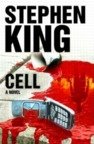
Books: Cell • Stephen King

• King is on the right frequency in Cell.

Genres: Horror, zombie, apocalypse
Published: Jan. 24, 2006
Verdict: &&&1/2

Cell finds Stephen King in familiar territory — as in The Stand, it’s apocalyptic, and, like a bunch of movies of recent years, it involves zombies, but in the context of a cautionary, almost anti-technology tale. If originality has never been King’s forte, good storytelling has, and he writes with a rare late-King period verve in this tale of a world gone mad because of a “pulse” sent out via cell phones, transforming the populace into frothing animals. The story follows a small group of survivors who band together and try to elude the dangerous “phoners.” King offers a likable core cast of characters, and the most compelling thread centers on Clay Riddell and his quest to find his young son. Cell builds to an ambiguous ending that is emotionally effective yet unsatisfying, and it is one of two missed opportunities here. Throughout the novel, King seems to lay the groundwork for a grand revelation of a sinister plot behind the pulse, but it simply never emerges, leaving the reader wondering what it was all for. Nevertheless, Cell is probably the best King novel I’ve read since Insomnia (granted, I’ve skipped many of them after The Girl Who Loved Tom Gordon) — not up to his best work, but certainly not phoning it in.

// Factoid // What is this, 1987? In a throwback to his glory days, King publishes a second novel this year, Lisey's Story, on Oct. 24.

Saturday, February 04, 2006

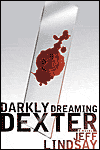
Books: Darkly Dreaming Dexter • Jeff Lindsay

Genres: Mystery, serial killer, suspense, thriller
Published: July 20, 2004, by Doubleday
Verdict: &&&1/2

I hadn't read a serial killer novel since growing tired of John Sandford years ago, and here's what it took to lure me back: A novel about a serial killer who kills other serial killers. But it slices even deeper than that clever twist. Lindsay's prose is most penetrating when protagonist Dexter Morgan, a blood spatter analyst for the Miami Police Department, wrestles with the evil urges (his Dark Passenger, as he puts it) within and struggles to appear "human" in his interactions with others. The novel has impressed others, too: A Showtime drama is being developed from the Dexter stories (there's a second novel, Dearly Devoted Dexter), which are a natural fit for the CSI era. Morgan's foster father noticed his evil tendencies at a young age and, knowing his son could not resist the urge to kill, encouraged him to channel his energy into doing away with bad people. A horrible experience at an early age triggered his obsession with slicing his victims bloodlessly, and his chain gets seriously rattled when a new killer in town begins slicing up bodies in the same fashion and teasing Morgan with clues. At the same time, he's caught up in departmental politics, tugged in one direction by his sister, who's on the case and asking for his help while growing suspicious of him, and tugged in the other by a detective who hates his sister and has the hots for him. Even worse, his Dark Passenger wants to come out and play. The conclusion isn't quite as satisfying as the journey there, but the prose is consistently as sharp as Morgan's instruments of destruction, making this a pleasant dance with a devil.

// Currently reading // Cell • Stephen King

Sunday, January 08, 2006

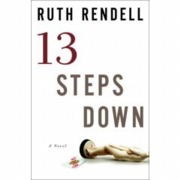
Books: 13 Steps Down • Ruth Rendell

Genre: Psychological suspense
Published: Sept. 27, 2005, by Crown
Verdict: &&&1/2

From the opening pages of 13 Steps Down, we know that we are about to witness the undoing of the principal characters – Mix Cellini, a man with an unhealthy interest in U.K. serial killer Reginald Christie and an obsession with a model with whom he has had several chance meetings, and his landlord, Gwendolen Chawcer, a grumpy, eccentric old woman (or "sarcastic old bitch," as Cellini pegs her) who spends her time reading the thousands of books lining the walls of her dark, cavernous old home and stores her flashlight in the refrigerator. We know that Cellini will undoubtedly kill and Chawcer is likely doomed to meet an unsavory fate, but it matters not: The pleasures of a Rendell novel lie in getting there. Her ability to convey the human mind's self-debate and rationalizations as, for example, Cellini finds ways – transparent to anyone but himself – to put himself in the path of his model crush is simply stunning. There's also a devastating look at unrequited love as Chawcer pines for the doctor who tended her father when she was a young lady. At this late stage, she takes to writing him letters and obsesses over the possibility that, all those years ago, he saw her accompany a family maid to an abortionist and deemed her classless. The use of a real-world figure, Christie, and the appearance on several occasions of a "ghost" are effective and welcomed deviations from typical Rendell plot elements, but Cellini's world unravels in classic Rendellian fashion. It's worth noting that the British master, after 41 years and more than 60 novels, apparently graced the New York Times bestseller list for the first time with this one thanks to a U.S. publicity blitz, and Entertainment Weekly named 13 Steps Down the number three fiction book of the year.

// Also see // Make Death Love Me • Ruth Rendell

Tuesday, October 11, 2005

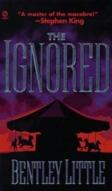
Books: The Ignored • Bentley Little

Genre: Thriller, but he's generally considered horror.
Published: 1997

Verdict:
&&&


Browsing Amazon for an interesting read, I noticed the books of Bentley Little and, in particular, his novel The Ignored. Had someone written a book about me, I wondered, without my knowledge? With titles like The Mailman and The Store, the books appeared to be very idea-driven in a Twilight Zone kind of way. In The Ignored, for instance, the protagonist, Bob Jones, feels ordinary and unnoticed, as if people tend to look right through him, and this starts to become literally true. Coworkers stop speaking; he can take a three-hour lunch, and no one's the wiser. Sweet deal, eh? But it's not a ticket to an easy life: Jones' parents die and no one bothers to tell him, and his sweetheart moves out in the middle of his freak-out over what he is. Jones eventually learns he is not alone and becomes involved in a group performing terrorist acts for "The Ignored," as they call themselves. The invisible-man concept leads to some funny moments, such as when Jones reports to work with a Mohawk and wearing outrageous clothes but goes completely unnoticed, and when he and his friends go to a court session and shout obscenities at the judge. Though I wouldn't call this a horror novel, Little does have a tendency to go for the occasional visceral shock, and there's a significant body count. It takes a little too long to really get rolling, and, in the latter half of the book, Little introduces several twists that are surprising but not necessarily satisfying. At its best, The Ignored is a sort of metaphysical meditation on the nature of existence – how thoroughly empty and hopeless life can be – and anyone who ever felt like an outsider is apt to cheer on the ignored as they try to find their place in the world.

// Next books //
13 Steps Down • Ruth Rendell

Darkly Dreaming Dexter • Jeff Lindsay

Sunday, September 25, 2005

Books: Make Death Love Me // Ruth Rendell

Genre: Psychological suspense
Published: 1979
Verdict: &&&

If anyone can make death love her, it's Ruth Rendell. In novel after novel, she creates characters flawed in the most fascinating ways and makes the reader root for them even as they kill someone or do some other despicable deed. In Make Death Love Me, a bored small-town bank manager is in the back of his branch when a couple of thugs who think he is out to lunch come in to rob and kidnap the solitary teller. In that horrified moment when most people would hit the panic button to summon help, he instead takes from the vault 3,000 pounds and flees out the back. He had, on many occasions, taken out the money in private and handled it "with the kind of breathless excitement many people feel about sex – or so he supposed, he never had himself …" In the diverging threads that follow, our runaway banker explores the vicarious life, falling in love while building lie upon lie, and the author has fun making the captive bank teller a tormentor of her captors until all comes full circle in a classic Rendellian calamity. Even if it doesn't have the rich complexity of a later masterpiece like Adam and Eve and Pinch Me, this 19th Rendell novel – she's now up to 59 books, counting her short story collections and pseudonymous Barbara Vine novels – is a satisfying yarn with flawed people making flawed decisions in a most entertaining fashion.

// Next books //
The Ignored • Bentley Little (1997)
13 Steps Down • Ruth Rendell (2005)

Saturday, August 27, 2005

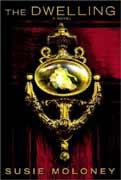
Books: The Dwelling // Susie Moloney

Genre: Haunted house
Published: Feb. 18, 2003
By the same author: Bastion Falls, A Dry Spell
Verdict: &&&&

From above, there's the thud of something falling over in the attic. Then, the sound of something being dragged across the floor. Everyone in Susie Moloney's The Dwelling hears this eventually, takes note of it and goes about his or her business. That's one thing I really like about this haunted house tale – the idea that people have the ability to ignore just about anything, no matter how horrible, in order to carry on with life. Even if Moloney's framing of the novel – three families move in and out while the life of realtor Glenn Darnley disintegrates in interludes between them – is an idea that has been done before (see Anne Rivers Siddons' brilliant The House Next Door), it serves her well. Her greatest strength is arguably characterization, and here she has a field day with a large cast of troubled souls: first, a young couple whose marriage is strained by ambition and intimacy issues; then, a recent divorcee and her awkward child, both struggling just to get through any given day; finally, a novelist with writer's block and a growing problem with alcohol; and the realtor, Glenn, whose husband died suddenly, leaving her to face a personal crisis alone. The haunting manifestations, such as the sound of the bathtub filling upstairs or faint music coming from the small room with the Murphy bed under the stairwell, mostly tend toward light chills, and that works just fine, even if it leaves this more a character study than a frightfest. Some have been critical of the two-page laundry list at the end explaining the source of the various manifestations, and I'll agree to that. The hints dropped along the way really are enough, and the list dulls the impact of a well-executed climax that happens just before. Nevertheless, Moloney is a talent who deserves a broader audience, and this Dwelling is a fine place to pay her a visit.

// Linkage //
Moloney's website

Tuesday, July 12, 2005

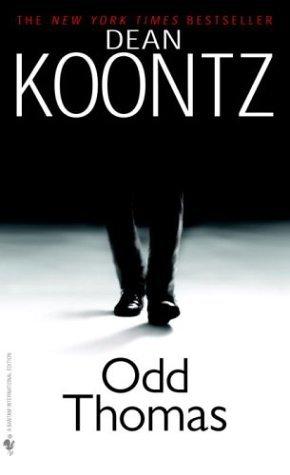
Books: Odd Thomas by Dean Koontz

Genre: Koontzian good vs. evil thriller
Published: 2003
Verdict: &&&1/2

If The Sixth Sense director M. Night Shyamalan were dead, his ghost would be haunting Haley Joel Osment, urging him to help exact revenge on thriller writer Dean Koontz. Not only does Odd Thomas, protagonist of the novel of the same name, see dead people, there's a twist – far less jolting than Shyamalan's – lurking at the end. It took, um, guts on the part of Koontz to shamelessly revisit such unoriginal territory. Nevertheless, nine years after reading my last Koontz, I decided this was the one that would bring me back to the fold. From the moment I read in a review that Elvis is one of the lingering ghosts, I wanted to read this novel. What turned me off Koontz around the Dragon Tears and Hideaway era was the numbing predictability; every novel had become the same basic tale of good versus evil with tedious chase scenes. The exciting spark of a Lighting or Strangers had gone cold. Here, Odd Thomas is a young fry cook whose "gift" attracts lost souls; like Sixth Sense's ghosts, they often want his help. He also sees entities called bodachs – slithery wisps that gather where death occurs or is imminent. The police chief knows about Odd's gift, which he uses to help subvert crimes. When a stranger in Odd's beloved desert town of Pico Mundo bellies up to the bar in his restaurant with an entourage of bodachs, Odd's sixth sense goes ballistic; he foresees impending doom. Much of the novel centers on Odd's sleuthing to learn the man's identity and what horrible crimes he plans to commit, and Koontz effectively layers on the tension and dread. There's also a sweet love story, but some of the writer's most moving prose emerges when he details the cruelty humans can inflict upon one another; the most brilliant scene of the novel may be Odd's encounter with his cold and troubled mother near the end. When the climactic confrontation between Odd and the villians finally arrives, it may not be altogether unpredictable. And this, too, is a basic tale of good versus evil, with a chase of sorts, to boot. But this is Koontz with spark.

// Linkage //
Official Koontz page